We use reinforced double-wall cardboard specifically for export in our multi-layered packaging. Each tatami mat is individually and carefully wrapped in waterproof paper and hermetically sealed.
In our more than 26 years of export experience, we have never had a single instance of mold occurring during transit.
Approx. 1–4 mats: Air freight may be more cost-effective in some cases.
Regardless of the number of mats: For sea freight, if the packaged volume is 1m³ or less, a "minimum charge" applies. Therefore, the shipping cost for 1 mat or 6 mats remains almost the same.
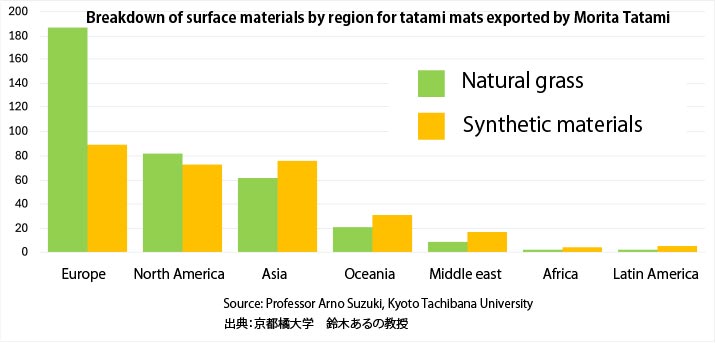
1. In many countries, natural igusa (the tatami surface) can be imported without restrictions.
Caution is required if using rice straw (the tatami core).
There are many other types of tatami cores that can clear regulations besides rice straw, so please consult with us.
2. If an inspection is required, it will be conducted within Japan (before departure), and our shop will handle the arrangements.
3. Separate fees will apply for the inspection and the issuance of certificates.
Air Freight: Door-to-Door delivery (to the customer's residence) is possible.
Sea Freight: In principle, delivery is only to the "local port." You will be contacted separately by a local agent regarding customs clearance at the port, duties, and domestic delivery costs.
① Keyword for requesting an agent: "IOR"
In countries where an individual cannot be the importer of record, you must ask the agent for "IOR (Importer of Record)" services. Communicating that you "wish to use IOR services (or fiscal representation)" at the time of inquiry will make the process smoother.
② Risk avoidance through materials (Washi or Resin Tatami)
Agents strongly dislike the risk of items being held up in quarantine. Choosing "Washi-paper" or "Resin-synthetic" mats instead of natural materials drastically lowers the hurdle for an agent to accept acting as your importer.
③ Consulting about Incoterms "DDP"
Confirm with the agent whether shipping under "DDP (Delivered Duty Paid)" terms—where duties and various fees are paid collectively on the Japan side—is possible. This minimizes unexpected local payments and customs troubles.
| Quarantine | Rice straw (core) requires treatment as specified in the permit. Igusa, Washi, and Resin do not require this. |
|---|---|
| Duty Rate | Standard: Currently 18.5% (As of May 2026) |
| Air | Individual / Company name OK |
|---|---|
| Sea | Company name only (Import agent recommended for individuals) |
| Quarantine | Natural igusa, Rice straw, Washi, and Resin do not require inspection. |
|---|---|
| Duty Rate | EPA Applied: 0% / Regular: 3.7% |
| Air | Individual Name / Company Name OK |
|---|---|
| Sea | Company name is required in most countries (EORI number, etc., may be required) |
| Quarantine | Natural igusa, Rice straw, Washi, and Resin do not require inspection. |
|---|---|
| Duty Rate | UK-Japan Agreement: 0% |
| Air | Individual Name / Company Name OK |
|---|---|
| Sea | Company name is required (EORI number, etc., may be required) |
| Quarantine | Rice straw is subject to quarantine. Igusa, Washi, and Resin do not require it. |
|---|---|
| Duty Rate | 5% |
| Air | Individual Name / Company Name OK |
|---|---|
| Sea | Company name is required in most cases. |
| Quarantine | Rice straw may be subject to quarantine. Igusa, Washi, and Resin do not require it. |
|---|---|
| Duty Rate | 5% |
| Air | Individual Name / Company Name OK |
|---|---|
| Sea | Company name is required in most cases. |
| Quarantine | Rice straw is technically importable, but due to extremely strict Australian customs, we have decided not to ship rice straw. Natural igusa, Washi, and Resin do not require it. We have exported many natural igusa tatami mats. |
|---|---|
| Duty Rate | 0% |
| Air | Individual Name / Company Name OK |
|---|---|
| Sea | Company name is required in most cases. |
| Quarantine | New Zealand customs has the strictest Biosecurity we have ever experienced. Therefore, we do not ship rice straw. Natural igusa, Washi, and Resin do not require it. |
|---|---|
| Duty Rate | 0%~5% |
| Air | Individual Name / Company Name OK |
|---|---|
| Sea | Company name is required in most cases. |
| Quarantine | In China, there are inspection requirements for the wood fiberboard used in the core and the natural igusa on the surface. Rice straw is considered a prohibited item. Washi and Resin do not require it. |
|---|---|
| Duty Rate | 0% (As of May 2026) |
| Quarantine | In the Philippines, there is an inspection requirement for the natural igusa surface. Rice straw is considered a prohibited item. Washi and Resin do not require it. |
|---|---|
| Duty Rate | 15% (As of May 2026) |
| Quarantine | All types of tatami mats can be imported. |
|---|---|
| Duty Rate | 0% (As of May 2026) |
| Quarantine | There is an inspection requirement for natural igusa and rice straw. |
|---|---|
| Duty Rate | 8% (As of May 2026) |
| Quarantine | There is an inspection requirement for igusa and rice straw. Alternatively, rice straw might be a prohibited item. |
|---|---|
| Duty Rate | 5% (As of May 2026) |
| Quarantine | There is an inspection requirement for rice straw, or it might be a prohibited item. |
|---|---|
| Duty Rate | 20% (As of May 2026) |
| Quarantine | No inspection requirements. |
|---|---|
| Duty Rate | 7% (As of May 2026) |
| Quarantine | There is a fumigation requirement for natural igusa. Since we cannot find an agent to perform fumigation using chemicals for igusa, in practice, we ship mats made of Washi or resin. Straw is considered prohibited. |
|---|---|
| Duty Rate | 15% (As of May 2026) |
| Quarantine | There are inspection requirements for natural igusa and rice straw. |
|---|---|
| Duty Rate | 20% (As of May 2026) |
